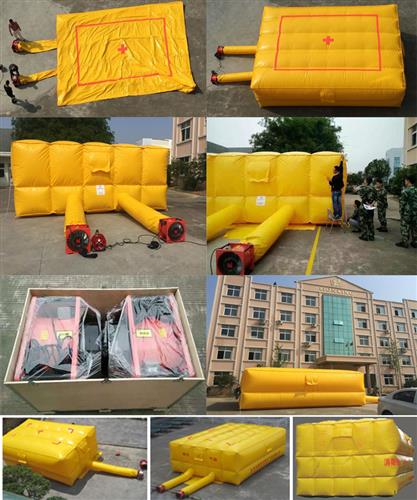
Proper use of Rescue Air Cushions is critical to ensuring their effectiveness in high-rise rescue scenarios. Here is a step-by-step guide to their correct deployment and use:
1. Pre-Deployment Preparation
-
Site Assessment: Evaluate the rescue environment to select a flat, unobstructed area directly below the rescue point, ensuring there are no sharp objects, debris, or obstacles that could puncture the cushion.
-
Equipment Check: Inspect the air cushion for any signs of wear, tears, or damage. Confirm that the inflation mechanism, valves, and connectors are functioning properly.
-
Personnel Assignment: Designate specific roles for team members, including inflation operator, safety observer, and communication liaison, to ensure a coordinated response.
2. Deployment and Inflation
-
Positioning: Place the air cushion in the predetermined area, ensuring it is oriented correctly to align with the expected fall trajectory. For multi-sized cushions, choose the appropriate size based on the rescue scenario (e.g., smaller for narrow spaces, larger for broader areas).
-
Inflation: Activate the quick-inflation mechanism immediately upon confirmation of the rescue need. Monitor the inflation process to ensure the cushion reaches full volume and maintains proper shape. The rapid inflation technology allows deployment in seconds, providing a critical safety net in time-sensitive situations.
3. During Rescue Operations
-
Communication: Maintain constant communication between the rescue team and the person in peril, guiding them to jump safely onto the cushion. Instruct the individual to land feet-first and in a controlled manner to minimize injury.
-
Monitoring: The safety observer must continuously monitor the cushion's stability and the surrounding environment for any changes that could compromise the rescue, such as wind shifts or structural instability.
4. Post-Rescue Procedures
-
Deflation and Removal: Once the rescue is complete, safely deflate the cushion using the designated valve and remove it from the scene. Inspect the cushion again for any damage incurred during use.
-
Maintenance and Storage: Clean the cushion thoroughly, dry it completely, and store it in a cool, dry place away from direct sunlight and corrosive substances. Regularly schedule maintenance checks to ensure it remains in optimal condition for future use.
Proper training and practice are essential for the effective use of Rescue Air Cushions. We recommend conducting regular drills to familiarize rescue teams with the equipment and procedures. If you need further training resources or product-specific guidance, feel free to contact our support team.